✧✦A LITTLE CURIOSITY GOES A LONG WAY
ReadyNotice. Wonder. Ask.
Turn one small observation into a question to explore together. Talk, point, draw, or write.
Creative activityExplore this resource
Story + guide · Children + grown-ups
A clock mystery, a parent guide, and a little investigation for the fall time change.
The story refers to the November 1, 2026 U.S. fall time change. The full illustrated story, parent guide, and sources are included here.
Illustrated story, family activity, and sources included below.
Fall 2026 · checked Nov 3, 2026
Share optional feedbackFALL 2026 STORY · ORIGINALLY PUBLISHED OCTOBER 31, 2026
This seasonal story describes the November 1, 2026 U.S. time change. References to “tonight” and “this weekend” belong to that original edition.
Halloween brings plenty of mysteries. Why is the doorbell ringing again? Where did that last piece of candy go? And this year, why does the clock get an extra hour? Watson and Sherlock are on the case. Sherlock would also like to know whether the extra hour comes with breakfast.
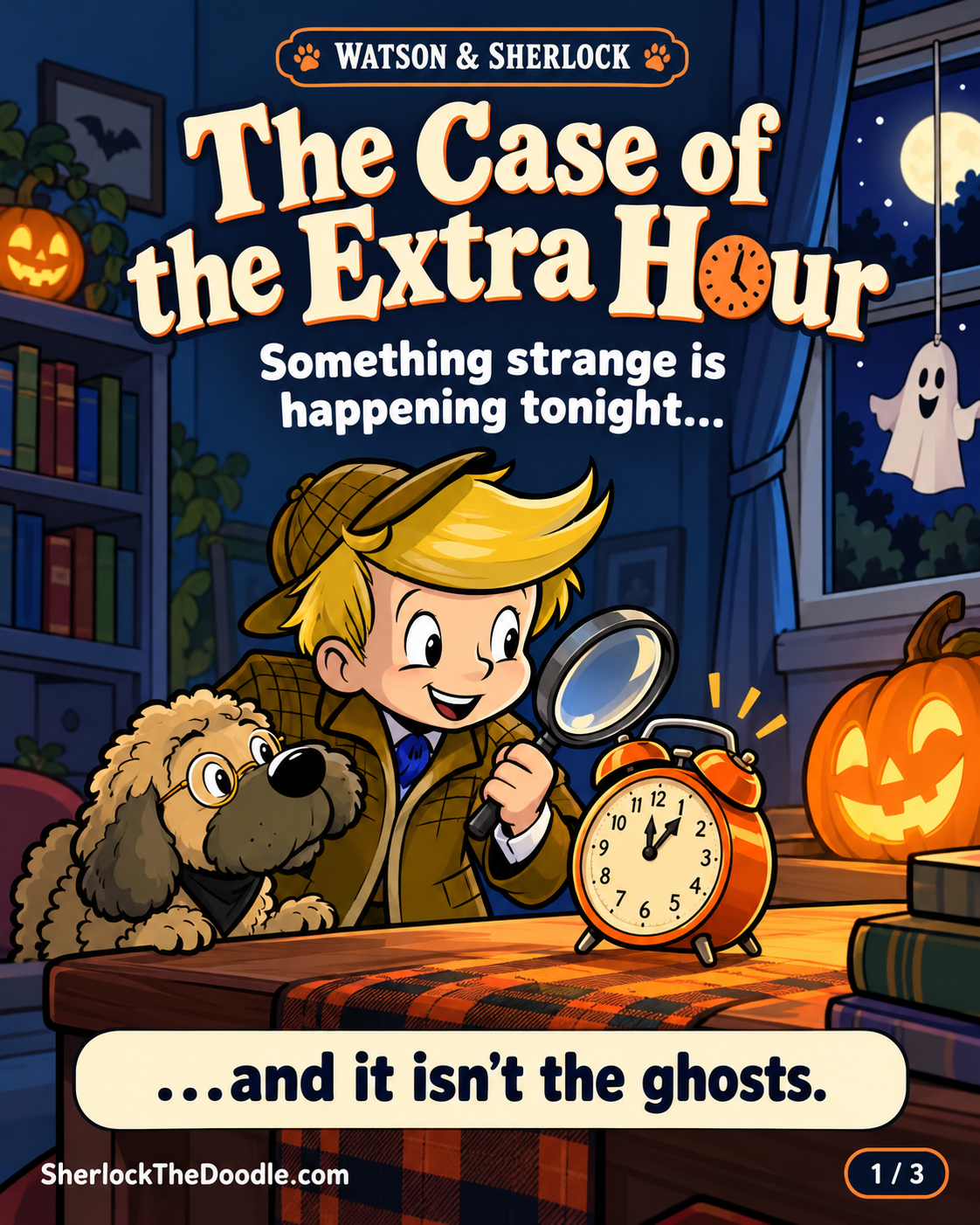
Something strange is happening tonight… and it isn’t the ghosts.
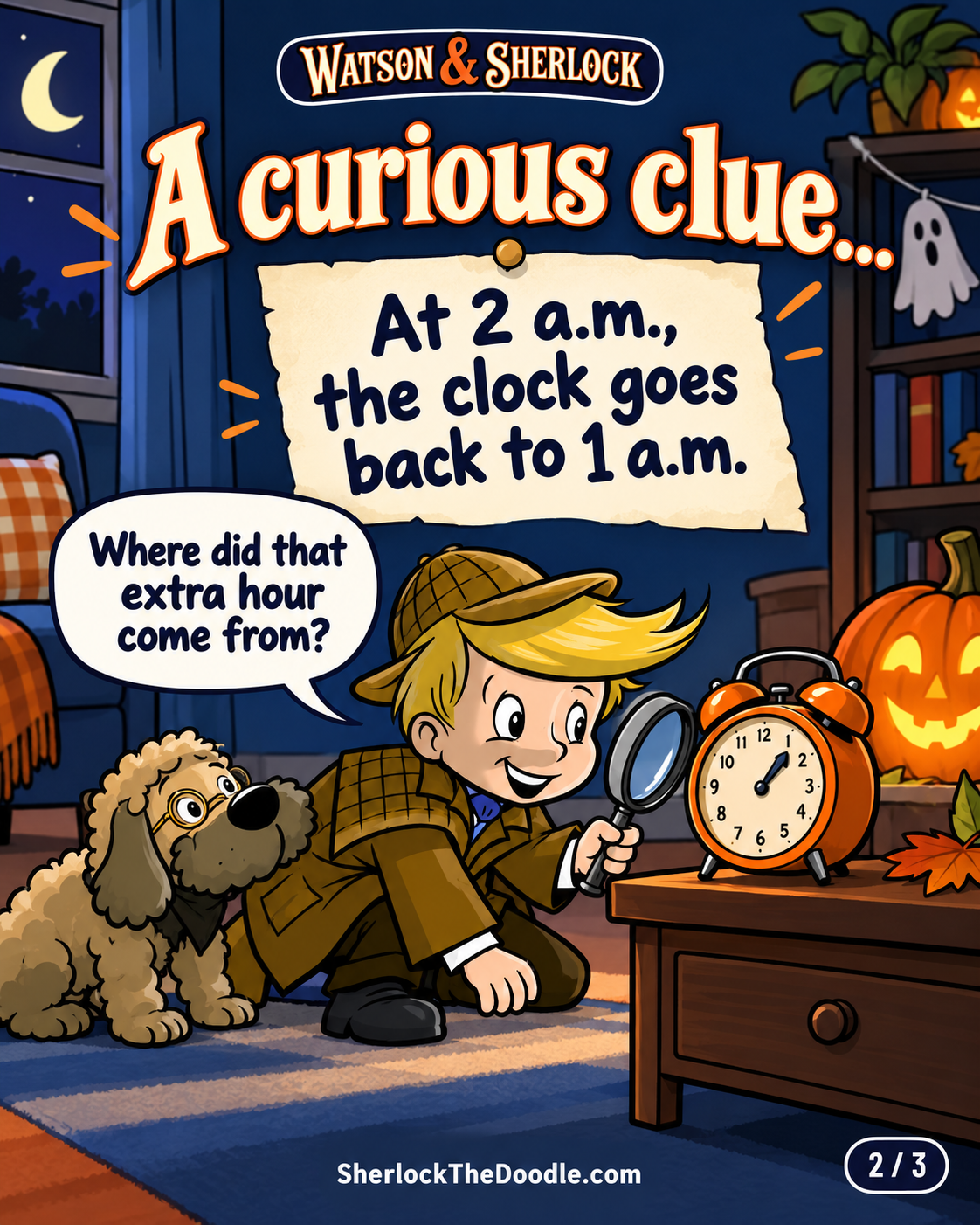
At 2 a.m., the clock goes back to 1 a.m. “Where did that extra hour come from?” Watson wonders.
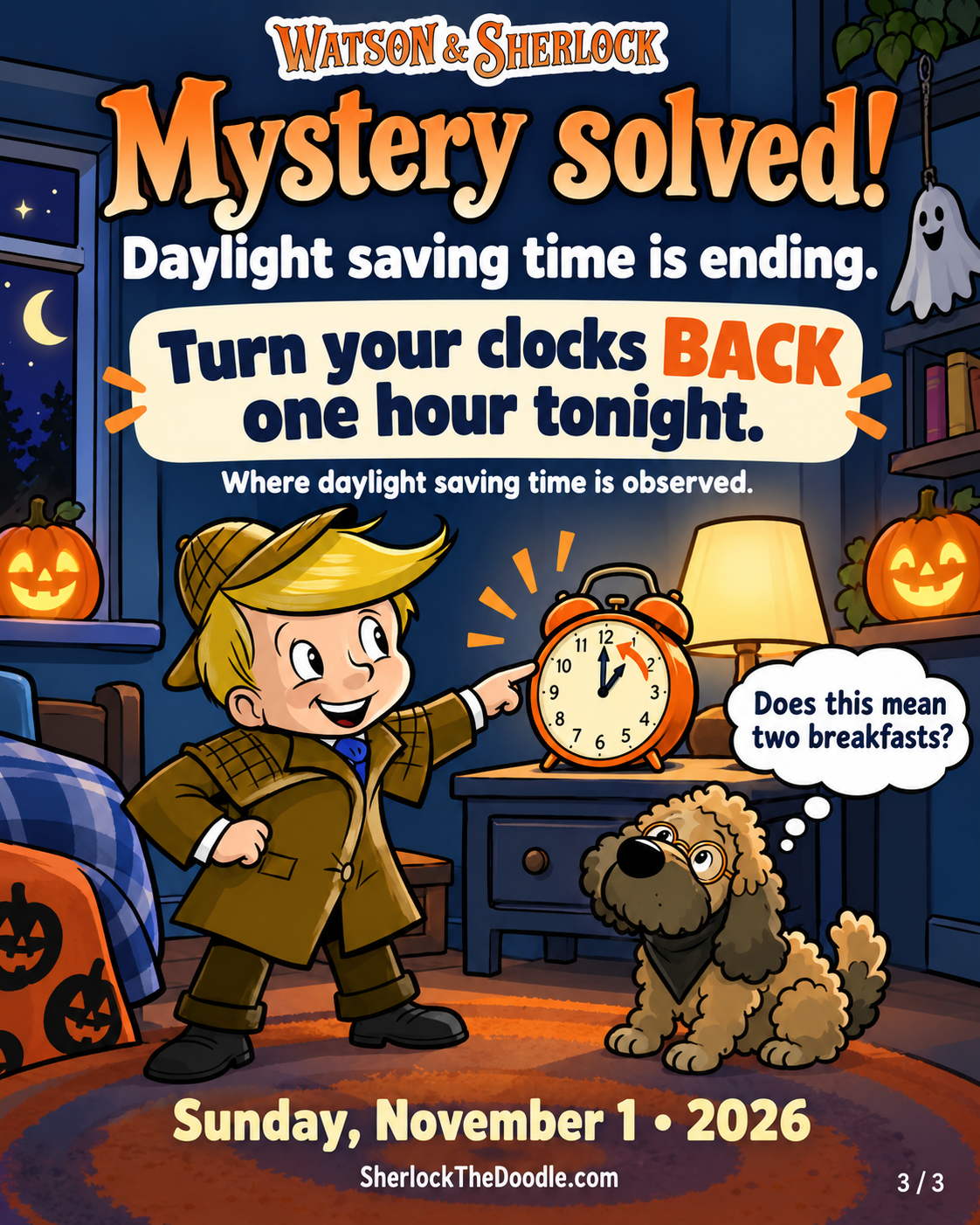
Mystery solved: daylight saving time is ending. In U.S. places that observe it, clocks move back one hour on Sunday, November 1, 2026. The hour from 1 to 2 happens twice. We change the time on our clocks; we haven’t made the sun do anything different. Sherlock’s next question: “Does this mean two breakfasts?” [1]
An extra hour on the clock is not a promise of an extra hour of sleep. Our internal body clocks do not instantly reset when the numbers change. If your child usually wakes at 7 a.m., that same moment becomes 6 a.m. by the new clock. They may also feel sleepy earlier in the evening. The clock changed; their body is still catching up. [2, 3]
If you are reading this between finding a costume and answering the door, you have not missed your chance to help. You do not need to turn Halloween into a sleep project.
Keep the familiar wind-down. After the costumes come off, return to the usual reassuring steps: teeth, a book, a cuddle, lights down. Predictability can help even when the evening runs differently. [2]
Ease toward the new schedule. Small changes to bedtime and naps can be easier than a big shift. Keep meals, play and bedtime reasonably consistent as everyone adjusts. [3]
Make room for daylight and quieter evenings. Spend some time outdoors during the day, and choose calmer, screen-free activities as bedtime approaches. [2]
Allow some patience. Adjustment may take several days, sometimes about a week. If sleep difficulties continue or you are concerned, bring them to your child’s healthcare team. [2, 3]
Try this little investigation with your child. There are no grades, and “I don’t know yet” is a perfectly good answer.
NOTICE: What does the clock say? What clues tell you that you feel sleepy or awake?
WONDER: If we change the clock on the wall, does the clock inside our bodies know right away?
ASK: What familiar things help our family get ready for rest? Let your child choose one to do together.
You can draw a clock, make a detective face, or let Sherlock answer the questions. He may bring the conversation back to breakfast.
Watson & Sherlock stories begin with everyday questions about the body. Meet the books and their curious detectives at SherlockTheDoodle.com.
[1] National Institute of Standards and Technology: Daylight Saving Time Rules. https://www.nist.gov/pml/time-and-frequency-division/popular-links/daylight-saving-time-dst
[2] American Academy of Pediatrics, HealthyChildren.org: Daylight Saving Time: Don’t Lose Sleep Over It. https://www.healthychildren.org/English/healthy-living/sleep/Pages/daylight-saving-time-dont-lose-sleep-over-it.aspx
[3] Nationwide Children’s Hospital: Helping Kids Adjust to the Time Change. https://www.nationwidechildrens.org/family-resources-education/700childrens/2025/10/helping-kids-adjust-to-the-time-change
STAY WITH WHAT YOU NEED
Turn one small observation into a question to explore together. Talk, point, draw, or write.
Creative activityExplore this resource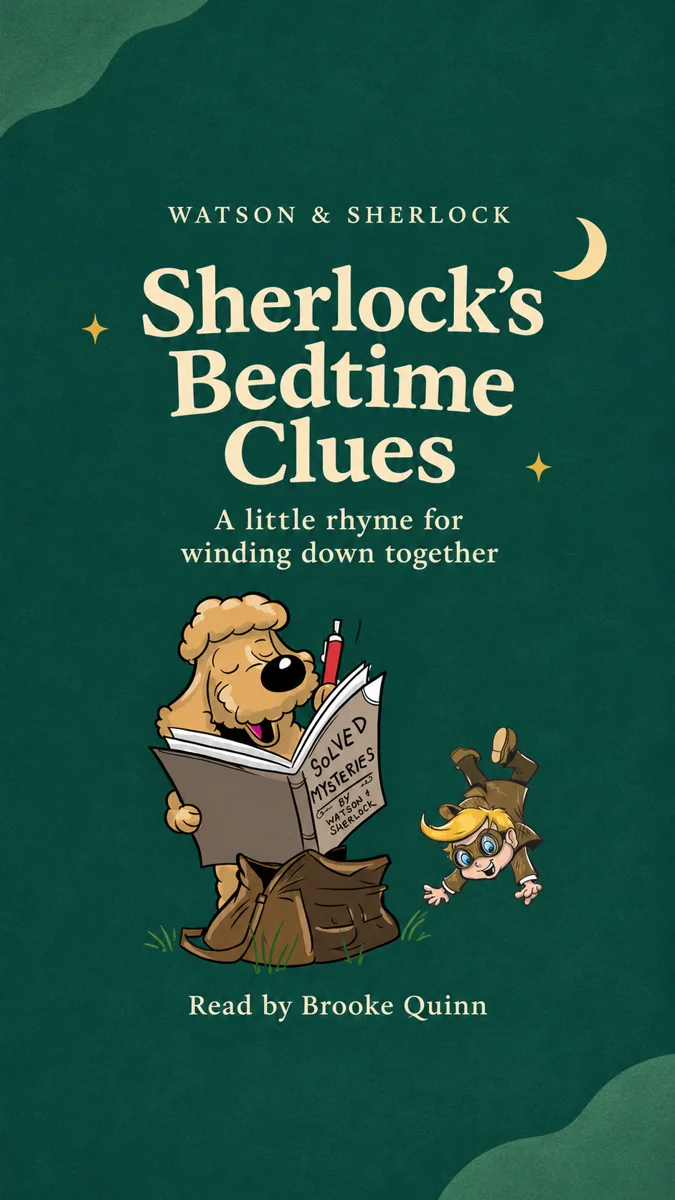 Ready
A little rhyme for winding down together. Listen, move, imagine—or simply rest.
Creative activityExplore this resource